Everything You Need to Know About Every Platform in 2026
In this episode, we break down why most marketing strategies fail—and it’s not because things are more complicated. It’s because businesses are solving the wrong problem. Drawing from a 2026 report by BusySeed, we explore how every platform—from TikTok and Pinterest to Reddit, LinkedIn, and Google—operates on its own set of incentives.
00:00
Welcome to the deep dive. You you're probably throwing marketing budget at like five different platforms right now. And I can almost guarantee that you're misdiagnosing why it's not working. Yeah, that's that is the standard reality for most businesses today, honestly. Right. Like you run a campaign, your visibility tanks, the leads dry up and the immediate reaction is usually just pure panic. You assume the game has gotten, you know, way too complicated. So you start scrambling, scrambling and trying to chase whatever.
00:28
whatever new growth hacks some influencer happens to be shouting about this week. Exactly. They treat their digital strategy like a game of whack-a-mole. Oh, totally. The moment an algorithm updates, they just throw out their entire playbook and start over, which is completely exhausting their teams and, well, their budgets in the process. Which brings us to the sources we are looking at today. If you are listening to this and feeling that exact panic about your digital footprint, um relief is on the way.
00:56
We have our hands on a remarkably comprehensive 2026 report from BusySeed. Yeah, the BusySeed Collective. They're a group of growth architects. Right. And this report is boldly titled, Everything You Need to Know About Every Platform. And their core thesis is actually incredibly grounding. They argue that marketing hasn't inherently gotten more complicated. No, it hasn't. We're just diagnosing the problem wrong. Yeah, we are reacting to surface level tactics instead of modeling platform incentives.
01:25
OK, let's unpack this. What does it actually mean to model a platform's incentives? Well, it requires a fundamental shift in how you view the internet. Every single platform you use operates on a specific hardwired set of incentive. Because they're businesses. Exactly. At the end of the day, they have metrics they need to hit for their shareholders. So if you stop chasing fleeting distribution hacks,
01:49
like using a trending audio clip or stressing over whether to post at 3,000 PM or 4,000 PM. that noise. If you ignore that and start understanding what a platform inherently wants to optimize, you can actually predict what it will reward. That makes a lot of sense. The report lays this out beautifully. Like, if you understand the underlying mechanics of a platform, you build a strategy that actually benefits from algorithm updates rather than being destroyed by them.
02:16
I love that framing. Stop hacking, start modeling. So for this deep dive, we aren't going to just read down a list of platforms like we're flipping through an encyclopedia. Oh, that would be terrible. Right. Instead, we are going to trace the actual psychological journey of a modern user. We are going to map your buyer's journey. Which is really the only logical way to view the ecosystem now. Nothing operates in a vacuum anymore. Exactly. We'll start exactly where demand is born.
02:45
trace how users validate their trust, explore how AI is now stepping in to synthesize the final decision, and then end with the engines that drive the actual conversion. Sounds like a solid roadmap. Let's jump right into part one, which is the genesis of demand. This is where interest is actually born before a user even knows they want to buy something. And to understand this, we really have to start with TikTok. Oh, absolutely. Now, the report notes they've surpassed 1 billion monthly active users globally, which is huge.
03:14
but raw user counts are just vanity metrics. Yeah, the real insight here is that TikTok fundamentally changed the underlying physics of how content moves. Right. They shifted the internet from a social graph to an interest graph. OK, wait, let me make sure I'm translating this correctly. The old way, the social graph, was the algorithm showing me a mediocre photo of my college roommate's breakfast just because we are connected. Yeah, exactly. Distribution was tightly coupled to your follower count.
03:43
Facebook, Instagram, that was their whole model. But an interest graph, that's the system ignoring who I know entirely. It's the algorithm tracking the fact that I let my thumb hover over a video of a guy doing like specialized woodworking for four extra seconds. those micro interactions. And then suddenly my entire feed is flooded with Japanese joinery techniques, regardless of who made the videos. That is the exact mechanism. And what's fascinating here,
04:06
is how that shifts the burden onto the content itself. Oh, it's your song. Yeah, you don't need a million followers to reach a million people on an interest graph. You just need to hold attention. TikTok entirely decoupled those two things. It makes me think of an analogy. Like, TikTok isn't a traditional high school popularity contest where the kid with the most friends automatically wins the election. No, not at all. It's a pure, brutal talent show.
04:31
The audience's applause meter in the first three seconds dictates who gets to stay on stage, and everyone else just gets the hook. That's a great way to put it. But here is my pushback. If I'm running a business, I might be thinking, you know, great, I can get a million views of teenagers watching a 15-second video, but does this actually drive business? Right, the whole empty views argument. Yeah, are people pulling out their credit cards, or is it just empty entertainment? Well, the data in the BusySeed Report explicitly refutes that narrative.
05:00
61 % of users report buying a product after seeing it on TikTok. Wow. 61%. Yes. That is an enormous volume of commerce. There's this brilliant quote in the text from Rachel Typograph where she says, TikTok isn't just an entertainment platform anymore. It's a discovery engine. A discovery engine? Yeah. Brands are seeing measurable, massive lifts in branded search volume on Google immediately after their TikTok content gains traction.
05:30
So it drives the search. Exactly. It doesn't replace traditional search. It precedes it. It literally plants the seed of what people are going to search for tomorrow. It creates the itch that Google later scratches. I love that. But let's look at what happens when that passive scrolling turns into active intent. OK. Say I saw that woodworking video on TikTok and now I actually want to build a table. I'm not passively watching anymore. I want to do something. That psychological shift takes us to a platform with a completely different energy, which is Pinterest.
05:59
Ah, yes. The quiet giant. The report calls out that 80 % of weekly Pinterest users discover new brands there. But nobody talks about Pinterest with the same breathless hype as TikTok. Because marketers fundamentally miscategorize it. They lump Pinterest in with social media. And it isn't a social feed at all. Right. It's totally different. It is a visual planning engine. Users go there specifically to map out future projects. A kitchen remodel.
06:28
a wedding, a wardrobe overhaul. The intent is heavily skewed toward future purchases. So what is the underlying mechanic that makes it valuable for a business? Because it's not velocity, right? No, it's content lifespan. On platforms driven by velocity, a post is functionally dead in 24 hours. But Pinterest relies on search alignment and keyword rich SEO. Like a search engine. Exactly. When a user creates a board for their kitchen remodel, they might pin a specific backsplash tile.
06:58
They might not buy that tile for another six months. But that pin sits there, organizing their intent. oh Because of that, a single well-optimized pin can generate durable high-intent traffic for months or even years. It's like planting an orchard versus lighting a firework. The firework gets all the oohs and ahs today, but the orchard feeds you for years. That's exactly it. OK, moving from the visual to the raw text-based narrative controllers. We've got X.
07:26
formerly Twitter and Metta's threads. The contrast in their mechanics is wild. really is night and day. Jack Dorsey once called X a global conversation in real time. And the report points out its mechanic is pure velocity. Yes. X is built for combative narrative control. Strong polarizing opinions spread exponentially faster than safe, nuanced ones. So it rewards the hot takes. Heavily. That makes X highly influential for ecosystem level perception. If you are in tech,
07:56
finance or media, that is where the journalists lives. A well-timed sharp perspective on X shapes the news cycle before the actual articles are even written. That's intense. But then you look at threads. They've frost 130 million active users, but the mechanic isn't combative velocity. No, the algorithm there actively rewards commentary. Right. The report notes that reply chains make up 45 percent of their engagement signals. Forty five percent. Which is a very deliberate design choice to foster conversation density.
08:24
Threads isn't a place to shout a hot take and run away, and it's certainly not a direct response channel for aggressive sales pitches. So how do you use it? It is a positioning layer. You win on threads by jumping into the replies of larger conversations and adding thoughtful insight. It allows leadership teams to build a brand voice and establish thought leadership with very low friction. OK, so let's follow our user's journey. Demand has been sparked.
08:50
Maybe they saw your viral demonstration on TikTok or they read an insightful reply you left on threads. They have the context. Exactly. They have the intent and they know your name. But now they want to know if you're actually legit. They need validation. This brings us to part two, which is the trust compression layer. This is a crucial step. It is. This is where the user actively goes looking for humans to give them the vibe check. And in today's internet, the ultimate human vibe check happens on Reddit and Quora.
09:17
Exactly. The BusySeed report highlights that Reddit threads frequently dominate page one of Google for product comparisons. mean, whenever I want to buy something, I literally type the product name and add Reddit to the end of the search. Everyone does it now. But I have to say, as a brand, isn't Reddit utterly terrifying? Like if you step into a subreddit and sound even slightly like a corporate marketing billboard, they will metaphorically burn you at the stake.
09:44
Oh, they absolutely will. The community's immune system will reject you instantly. The immune system, I like that. But that ruthlessness is exactly why Reddit is so powerful. The platform's mechanic is strict community enforcement. Forced brand language and polished marketing speak kill your performance. So how does a business actually navigate a space that hates businesses? By radical transparency. You succeed on Reddit by not acting like a brand. You participate in the culture of that specific subreddit.
10:14
You answer questions honestly, and you admit your product's flaws. Wow, admitting flaws. That's hard for marketers. It is. But if you capture demand on Google, Reddit is the invisible force that shaped that demand beforehand. And Quora operates on a similar wavelength, but it's tailored more for mid-funnel authority. You're funnel authority, meaning people go there to figure out how things work before they buy. Precisely, particularly for complex services. Buyers are researching hidden costs, implementation risks,
10:43
and vendor comparisons long before they ever fill out a contact form. If a service business provides a deeply detailed data-backed answer on Quora, they get to publicly demonstrate their expertise. You aren't just claiming to be an expert on a billboard, you are proving it in public. Demonstrating, not claiming. That makes sense. And that leads perfectly into the heavy hitter of B2B Trust, which is LinkedIn. Over one billion members now? It's massive.
11:08
The report emphasizes that organic reach for personal profiles is completely crushing the reach of faceless company pages. Founder led, people first content is the one mechanic. Because LinkedIn has evolved into the ultimate trust compression engine. Think about the modern B2B buyer journey. Research consistently shows that buyers consume seven to 10 pieces of content independently before they ever agree to speak with a sales rep. They are evaluating you in the dark. Yeah.
11:35
They're doing all their homework before they even raise their hand. Exactly. And LinkedIn acts as an asynchronous relationship building system. Asynchronous relationship building. Yeah. If a founder or an executive is consistently sharing behind the scenes insights, case studies, and industry commentary, they are radically shortening the time it takes a prospect to trust them. Oh, I see. By the time that prospect finally takes a meeting, they feel like they already know how you think. That is trust compression.
12:03
That's incredibly powerful. Before we move on, I want to briefly mention the wild card the report brings up, which is BlueSky. Ah, BlueSky. Yeah, it's decentralized, notoriously anti-algorithm, and has virtually no ads. It feels like a haven for digital natives trying to escape the noise. It is, and that raises a critical point about timing and audience mapping. BlueSky is not a direct revenue engine right now. Right, don't go there to sell. Exactly. But if your target audience consists of technical founders, developers,
12:33
or early digital adopters, it is a vital reconnaissance space. Reconnaissance. Showing up there proves you understand where the culture is heading. It's about building credibility early with the people who will dictate the next wave of internet behavior. Reconnaissance, not revenue. Got it. Mm. OK, let's look at the map. We've sparked demand passively on TikTok or actively on Pinterest. We've passed the brutal human vibe check on Reddit and compressed trust on LinkedIn. We're making good progress. We are.
13:02
Now, the user goes to actually find the provider to make their final decision. This brings us to part three. And honestly, this is the most disruptive shift in the entire BusySeed report, the synthesis era. This is the new reality of Google and AI. This is where the ground is fundamentally shifting beneath every marketer's feet. Here's where it gets really interesting. Google still processes over 8 and 1 billion searches a day, intercepting massive amounts of commercial intent.
13:30
but the way they deliver answers is changing entirely. Completely entirely. We are moving rapidly away from link aggregation, where Google just hands you a list of 10 blue links and makes you do the reading toward synthesized search driven by AI overview. Right. The old playbook was simply ranking a specific page on your website for a specific keyword. The classic SEO. Yeah. But that is no longer enough to guarantee visibility. We are dealing with large language models, or LLMs. Which everyone is using now.
13:59
The report notes that over 60 % of professionals are using AI tools weekly for deep research. These models don't crawl the web like a traditional search engine index. They synthesize data based on entity recognition. OK, let's translate that. So entity recognition is that basically the AI acting like a detective. Pretty much. It's not just looking at what you claim on your own website. It's looking for corroborating witnesses across the entire internet to prove you are a real coherent business. It is a perfect way to conceptualize it.
14:30
The AI wants to see coherence. It looks for consistent brand mentions, credible citations on third-party industry sites, and authoritative content scattered across different platforms. So if you're only on your own website... If you have a beautically optimized website, but you functionally don't exist anywhere else on the internet, the AI isn't going to confidently synthesize you into its answer. You are deemed a low-confidence entity.
14:56
It's like handing a hiring manager a great resume. But when they call your references, the numbers are all disconnected. The AI demands references. It absolutely does. So how does a business actually build that coherence? The report points to a massive, often overlooked lever, which is review platforms. Eighty seven percent of consumers read online reviews. But the report argues reviews now operate on three distinct layers. And missing even one of these layers hurts you.
15:24
The first layer is algorithmic. This is traditional local SEO. Google's map pack weighs your review velocity and volume. OK, that's the standard stuff. Right. The second layer is psychological. That's the raw human trust element when someone actually reads a detailed five star review. But the third layer is the newest, GEO or generative engine optimization. Generative engine optimization. How does an AI actually process a review? Does it just average out the star? It doesn't just count the stars. When you ask chat GPT,
15:52
or Gemini to find the most reliable commercial roofer near me, those systems pull from structured review data and analyze the actual sentiment within the text. Oh, the actual words. Yes. They look for recurring themes. If 20 reviews mention that your crew cleaned up the site perfectly, the AI synthesizes that sentiment and literally tells the prospect, this company is highly recommended for their site cleanliness. Wow.
16:20
Your reviews dictate the exact language the AI uses to describe you. Your customers' words are literally programming the AI's opinion of you. That is wild. It's total paradigm shift. And speaking of feeding these systems trust signals, the report heavily emphasizes YouTube here. It is still the second largest search engine globally. But unlike the rapid fire three second applause meter of TikTok, YouTube operates on a completely different mechanic. It rewards immense depth. If TikTok is the spark that catches your eye.
16:48
YouTube is the hearth that keeps you warm. Ooh, I like that. A structured library of long-form educational videos on YouTube is the ultimate AI era asset. When you create a 15-minute video explaining the exact installation process of your software, you are answering your prospect's deepest objections at scale. It just lives there forever. Exactly. And crucially, because Google owns YouTube, all that engagement and authority feeds directly back into Google's ecosystem.
17:17
strengthening your entity coherence. It's the ultimate objection handling machine that works tirelessly while you sleep. Okay, let's recap where our user is. We have captured their attention, we have validated their trust with human communities, the AI systems recognize our coherence and are confidently recommending us. Sounds like a done deal. Almost. Now the grand finale. How do we systematically turn all of this built up goodwill into actual revenue? Enter part four, the conversion accelerators.
17:44
We are closing the loop with the direct response heavyweights. These are the engines designed to drive the actual transaction. Then we have to start with Facebook or Meta. Now let's be clear, organic reach for a business page on Facebook is practically dead. Yeah, under 5%. Right, the report clocks it at under 5%. You are not going to go viral just by posting updates to your company page. However, it remains arguably the most phenomenal direct response advertising engine ever built. But you have to feed it correctly.
18:12
Which is where the vast majority of businesses fail. Right. When I read this section of the report, it made me think of this analogy, like Facebook's advertising algorithm is like a highly trained tracking dog. Okay, tracking dog. Yeah. If you give that dog the scent of a low-intent action, like a basic, shallow lead form that takes two seconds to click it, runs out into the internet and brings you back thousands of low-intent users. Yeah, junk leads. Exactly. You get a dashboard full of clicks, but absolutely zero sales.
18:41
You have to feed the dog the scent of actual closed revenue. That analogy is spot on. Advertisers constantly blame bad creative or ad fatigue when their Facebook campaigns fail to generate sales. But the real issue is almost always signal misalignment. Signal misalignment. Meta's machine learning optimizes based on the historical patterns of the specific event you tell it to track. To fix this, you have to import your downstream CRM data via API.
19:10
Let's do another quick translation for the non-developers listening. You're saying we need to connect our actual sales cash register, our CRM, directly into Facebook's brain. Yes. So instead of optimizing for the person who merely clicked a button, the algorithm learns the behavioral patterns of the person who actually signed a $10,000 contract. Exactly. You are training the machine with real money, not proxy metrics. And once you do that, Facebook absolutely shines as a retargeting sequence engine.
19:38
But not for cold traffic. Right. It is wasted as a cold traffic billboard. Use it to segment people based on intent. If a user watched your deep dive YouTube video, Facebook shows them an educational ad. OK. If they visited your pricing page, it shows them a glowing customer testimonial. If they abandoned a shopping cart, it gives them a time sensitive urgency offer. You're systematically walking them down a path to conversion. Systematic sequencing. It's brilliant. Now let's round out the conversion tier with Instagram and Snapchat.
20:07
For Instagram, the core mechanic is attention retention driven by emotional relevance. It's a highly visual platform, but the algorithm really cares about watch time. Right. Reels are winning right now because watch time equals algorithmic amplification. And notably, personal brands and creators are vastly outperforming slick corporate logos there because the system rewards raw relatability. Instagram reduces the friction in the buyer journey by showing up in their feed with
20:36
Relatable aesthetically pleasing content you stay top of mind in a very personal emotional way until they are ready to convert and then their snapchat The report gives it a specific nod noting it still reaches 75 of us users age 13 to 34 That's a huge demographic. Yeah, its mechanic relies heavily on immersive vertical augmented reality formats like trying on a pair of sneakers virtually through your phone camera
21:01
The takeaway here is that it's highly efficient, but only if you are targeting Gen Z lifestyle, fashion, or entertainment markets. It's a scalpel, not a sledgehammer. If your demographic alignment isn't perfectly matched to that younger experiential cohort, forcing your way onto Snapchat just adds unnecessary complexity to your strategy. Okay, we have covered an incredible amount of ground. We've gone from the three second talent show of TikTok through the psychological planning of Pinterest.
21:28
into the ruthless vibe checks of Reddit, all the way to the AI synthesized answers of Google, and finally to the tracking dog retargeting of Facebook. So what does this all mean for you? If we connect this to the bigger picture, the underlying philosophy of the BusySeed report is a stark warning against isolation. You cannot hack these systems anymore. You really can't. If you look at marketing as a bunch of disconnected tactics, doing a random TikTok dance here, running a generic Facebook ad there,
21:57
and completely ignoring your reviews, you will exhaust your budget for very little return. You end up rebuilding the wheel every time an algorithm twists its code. Precisely. You have to build a cohesive digital infrastructure. Your educational YouTube library should be actively answering the objections raised by skeptics on Reddit. It has to be. Your customer review should be actively feeding the positive sentiment for AI overviews on Google. And your CRM should be feeding clean, high-intent revenue signals
22:26
back into your meta ads. That's the ecosystem. Yes. These platforms are businesses. If you feed their goals, retaining user attention, fostering real human conversation, and providing high quality data signals, they will happily feed your goals, which is revenue. Stop reacting to the surface. Start modeling the infrastructure. It all comes back to that core idea. It's stepping away from the panic of the murky waters and realizing there's actually a logical anatomy to how all this works.
22:54
It's an ecosystem you can map, and once you map it, you don't have to be afraid of it. Map the journey, and you master the outcome. Which brings me to a final thought for you to mull over as we wrap up today. Think about your own digital footprint right now. Think about the entire web. If an AI assistant scraped absolutely everything about you or your business today, every review, every social post, every Reddit mention to give a synthesized answer to a potential buyer asking, are they the best option?
23:20
Well, what exactly would it say? Would it see a compelling, deeply coherent entity? Or would it just see a chaotic pile of disconnected tactics? Thank you so much for joining us on this deep dive.
About the Author
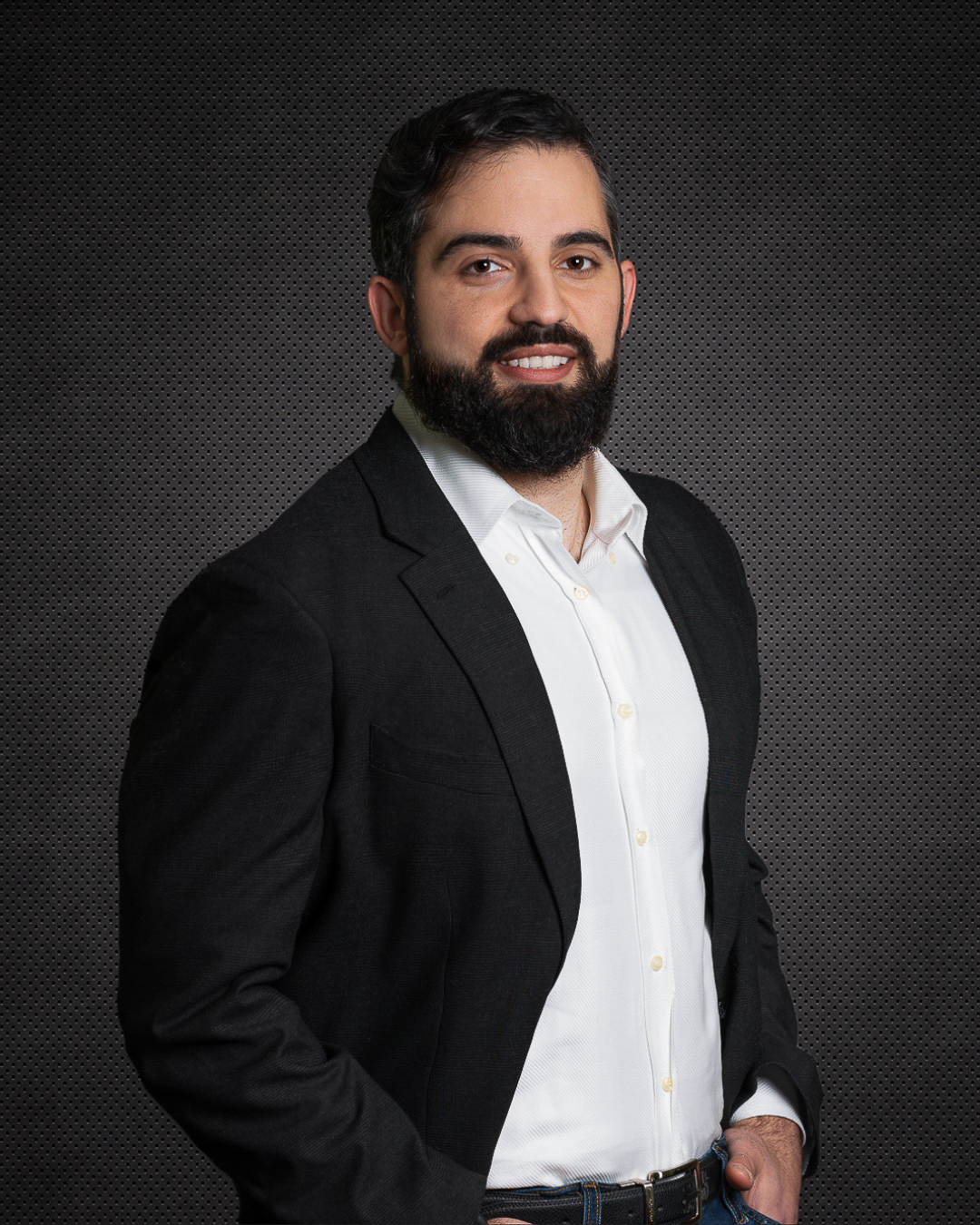
Omar Jenblat is a powerhouse in the digital marketing landscape, renowned as the Founder and CEO of BusySeed, an award-winning agency that has scaled over $1B revenue for 550+ businesses through high-performance growth strategies. With a technical foundation in computer engineering, Jenblat bridges the gap between complex data analytics and creative marketing, specializing in aggressive revenue scaling, SEO, and multi-channel lead generation. As a member of the Forbes Agency Council, The Org, and a visionary entrepreneur behind ventures like LeadChaser.ai, The Honest Agency, and Zeed Agency, he has established a global footprint by leveraging a "human-led, AI-assisted" philosophy to drive measurable ROI for major brands and startups alike. His expertise is characterized by a focus on digital automation and performance-driven results, consistently positioning his firms at the forefront of the evolving technological landscape.