
Molly Berard • January 7, 2020
Now that we’ve discussed what search engine optimization is, we want to give you some tricks to improve it to get you a better Google PageRank.

In our last blog, we discussed what search engine optimization is and briefly described some of the factors that affect your Google PageRank. If you haven’t read that blog, you can find it here: https://bsyl.ink/the-scoop-on-search-engine-optimization. This week we want to dive deeper into how you can use search engine optimization to your advantage and give you some helpful tips and tricks for increasing your PageRank.
Researching Keywords
By now it should come as no shock to you that seo keywords are critical for search engine optimization. But how do you know which keywords to use to get you the best result? Keyword research. If there’s one thing to take away from this article it is the importance of researching keywords prior to using them. Anyone can write a blog and shove a bunch of keywords into it. What’s important is using the correct keywords. So what exactly makes a keyword good? You want to make sure that the keywords you select have a relatively high search volume and relatively low competition/difficulty. You also need to make sure that your keywords are relevant to your business and that they are things your target audience searches for. For example, if you own a nail salon, you should be researching keywords related to your services. You want to incorporate keywords about nail polish, painting nails, nail trends, nail art, etc. You don’t want to be using keywords about DIY crafts, recipes, or other random things. Keep in mind that the point of seo keywords is to display your site when someone completes a Google search. Therefore, you want to research to find out what keywords your target audience is looking for. Someone interested in getting their nails done is going to search for things like “nail salons near me,” “get my nails done,” etc. Someone searching for “DIY crafts” is almost certainly not in the market for a manicure.
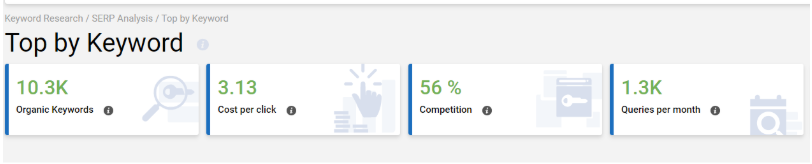
Where can you go when researching keywords? There are several great tools online including Serpstat, Neil Patel , and Google Keyword Planner. When researching keywords, ignore the competition that is paid; these are not the spots on the page that search engine optimization works to fill. Paid ads will always be displayed above Google PageRank selections. Instead, keep an eye on the SEO statistics, particularly search volume and keyword difficulty. Generally speaking, you want to go after keywords that have a high search volume (more than 1k at least) and a low difficulty score (50 or below). By researching and targeting these keywords, you set yourself up for success and faster improvements in your Google PageRank. If you decide to target very difficult keywords, you will have to incorporate them into your site and blogs A LOT to get noticed by Google. Difficulty is rated by the number of other sites using it for search engine optimization, and the size and current PageRank of those sites. If you’re a small nail salon trying to beat out a behemoth like Amazon, you really don’t stand a chance. By selecting keywords with a more reasonable difficulty score, you better the chances of ranking with them.
Write Blogs
Ok, now that you’re done researching keywords you’re ready to use them to help your search engine optimization. One of the easiest ways to do this is through blogs. Writing blogs for search engine optimization is not as simple as you may think. Using a keyword once or twice is not enough to boost your Google PageRank. For blogs to be successful, use each keyword at least four or five times. As we’ve discussed, “using a keyword” does not mean “throwing a keyword in a heading by itself and calling it a day.” Google checks blogs to make sure keywords are being used naturally in the content. Blog writing is a learned art form because it can be very unnatural to use redundant words over and over again. Once you get the hang of it though, you can write blogs quickly and share on your site. Your articles will soon contain all of the keywords you painstakingly researched, and should start boosting your Google PageRank. When writing blogs, make sure it’s content that you would want to read as a consumer. The more relevant the topic, the more people will be interested in what you have to say.
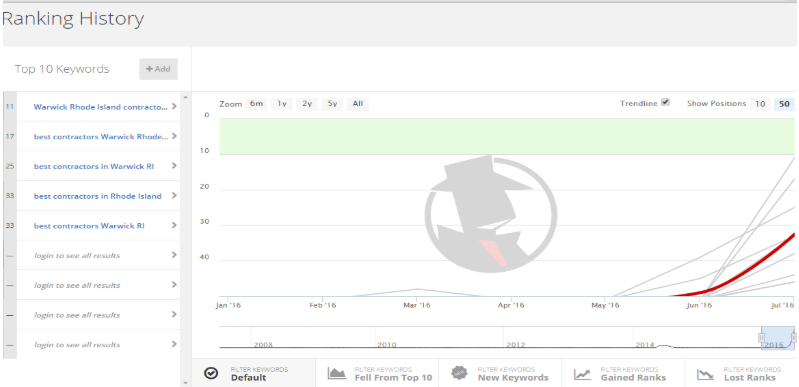
Here you can see a screenshot of how BusySeed helped a client dramatically improve their ranking through our use of SEO. Using blogs and optimization we were able to see a sizable upwards trend in just a few months!
Optimize Your Website
Finally, always keep in mind that search engine optimization involves your website as well. Many website-building tools have easy-to-use systems that help you plug in everything you need when it comes to search engine optimization. They will ask you for keywords on the page, an SEO title, and SEO descriptions. This makes it easy for Google to index, thus making it easier for you to see increased Google PageRank. Make sure that you use keywords on the pages themselves, particularly in headings or titles. Speaking of which, make sure you set headings and titles as special text. Most site builders will give you options like H1, H2, H3, etc. Google indexes these faster and more efficiently than regular body text. It’s also good to include images, videos, and engaging content on your site to keep people on it longer. Google takes “time spent on page” into account when ranking sites, so the longer you retain your audience the better it is! These are just a few of the ways to optimize your site for search engine optimization. There are many detailed articles on this topic online that you should take a look at. This one from The Daily Egg is a great read: https://bsyl.ink/OptimizingWebsiteSEO.
There you have it! These are just a few of the ways you can improve your Google PageRank and search engine optimization. Growing your SEO is a time-consuming process that cannot be rushed. Because of this, many companies struggle to keep up with the workload involved. If this is the case for you, contact BusySeed! We are a team of digital marketing experts with proven results in the world of SEO. We can write blogs for you and optimize your website to get you ranking higher on Google. Call us today at (888) 353-1484 to get started!