
Wondering whether Google Ads or Meta Ads brings better leads for home services? We break down CPL, audience intent, visuals, and use cases to guide your decision. Learn what top NYC advertising agencies already know.
Google Ads or Meta Ads: Which Platform Gets Better Leads for Home Services?
If you’re a home services business owner trying to pick the best ppc ads management platform, you’re not alone. Whether you offer HVAC, plumbing, roofing, landscaping, or anything in between, the debate between Google Ads and Meta Ads (formerly Facebook Ads) is still going strong. Which one drives better-quality leads? What has the best cost-per-lead (CPL)? And if you’re working with top NYC advertising agencies, what would they recommend? At BusySeed, we’ve managed thousands of campaigns through both Google Ads and the Meta Business Ads Manager. With deep expertise in scaling lead generation for home service companies across the country, we’re here to provide clear answers. In this post, we’ll break it down by channel performance, audience intent, creative needs, cost, and unique use cases, so you can make a smart decision that drives real ROI when choosing between facebook or google ads.
The Lead Gen Breakdown: Google Ads vs Meta Ads for Home Services
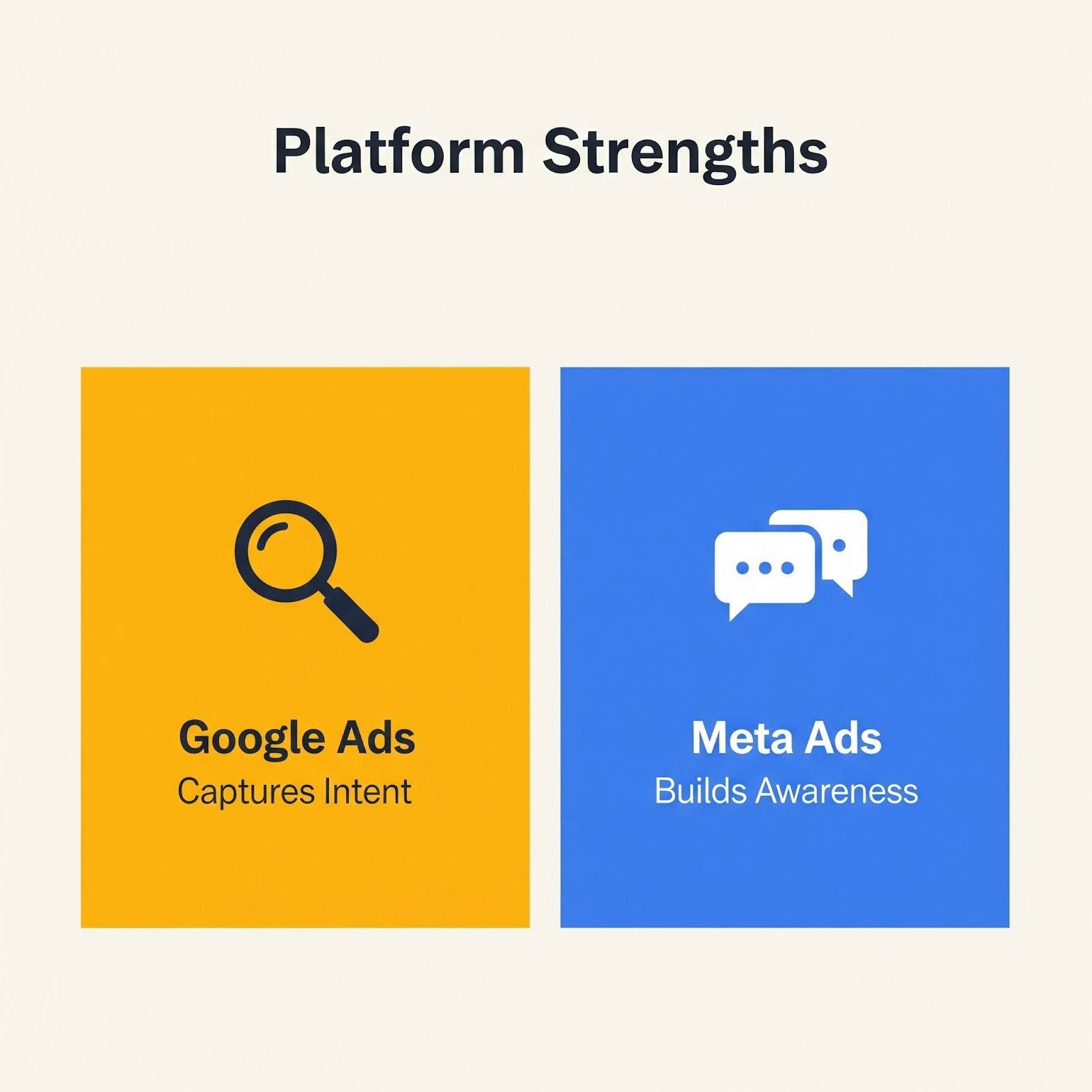
Let’s cut to the chase and dive into what really matters for home services companies when choosing between facebook or google ads. Understanding these differences is key to effective ppc ads management.
1. Audience Intent: Who’s Ready to Buy?
Google Ads: High Intent, High Readiness
Google Ads has a massive advantage, search intent. When someone in New York types “emergency plumber near me” or “best HVAC repair NYC,” they’re actively looking for help. These are bottom-of-the-funnel users ready to take action now. According to WordStream, the average click-through rate (CTR) for Google Ads in the home services industry is 3.71%, with conversion rates ranging from 5-15% depending on service and market. That’s a goldmine for businesses needing booked consultations, service calls, or quotes. Many New York ad agencies prioritize Google Ads for this very reason when immediate lead generation is the primary goal.
Meta Ads: Driving Demand, Not Responding to It
Meta Ads (via Meta Business Ads Manager) reach users passively scrolling through Facebook or Instagram. While targeting is powerful, interests, behavior, household income, and even homeownership status, it lacks search intent. You’re essentially interrupting rather than fulfilling a need. However, Meta can work wonders for mid-funnel or top-of-funnel brand awareness. For example, retargeting a visitor who viewed your “roof inspection” page last week could pull them back with a compelling offer.
Who wins?
- For high-intent, immediate leads: Google Ads.
- For building trust over time through storytelling and remarketing: Meta Ads.
2. Visual & Creative Needs
Google Ads: Search-Driven, Minimal Visuals
With standard search campaigns, your creative arsenal is limited to headlines, descriptions, and ad extensions. You need clear, compelling copy that targets the right keywords, something BusySeed’s ppc ads management team excels at. While Performance Max campaigns and Display Ads on Google do incorporate visuals, the core of search advertising remains text-based.
Meta Ads: Visual-Heavy, Emotion-First
Meta thrives on eye-catching visuals and emotional storytelling. Want to highlight your team’s craftsmanship or showcase a dramatic before-and-after landscape design? Facebook or Google Ads present different creative challenges, but Meta explicitly demands strong visual content. You’ll need high-quality images or videos, text overlays, and a crisp call to action. Creative burnout is also a risk, requiring fresh content regularly. This is where working with experienced New York ad agencies can provide a steady stream of high-performing creatives.
Who wins?
- For copy excellence and tactical PPC: Google Ads.
- For visual storytelling, dynamic creatives, and brand recall: Meta Ads.
3. Cost Per Lead (CPL): The Bottom Line
Understanding the potential CPL is crucial when deciding between facebook or google ads.
Google Ads:
- Average CPL for home services: $24, $80+
- Highly variable by location (e.g. NYC vs mid-size cities)
- Competitive auction model (think “emergency electrician Brooklyn”)
Meta Ads:
- Average CPL: $10, $30
- Lower intent = more nurturing
- May require multiple touchpoints before conversion
Let’s say you're a NYC-based home cleaning service. Google Ads may cost you $45 per lead, but those leads are urgent, high-converting. Meanwhile, Meta might generate leads at $18 through the Meta Business Ads Managerbut you’ll need to nurture them with email flows or warm touchpoints before they book. Effective ppc ads management involves tracking these metrics closely to optimize spend.
Who wins?
- For lower upfront CPL: Meta Ads.
- For higher conversion likelihood per lead: Google Ads.
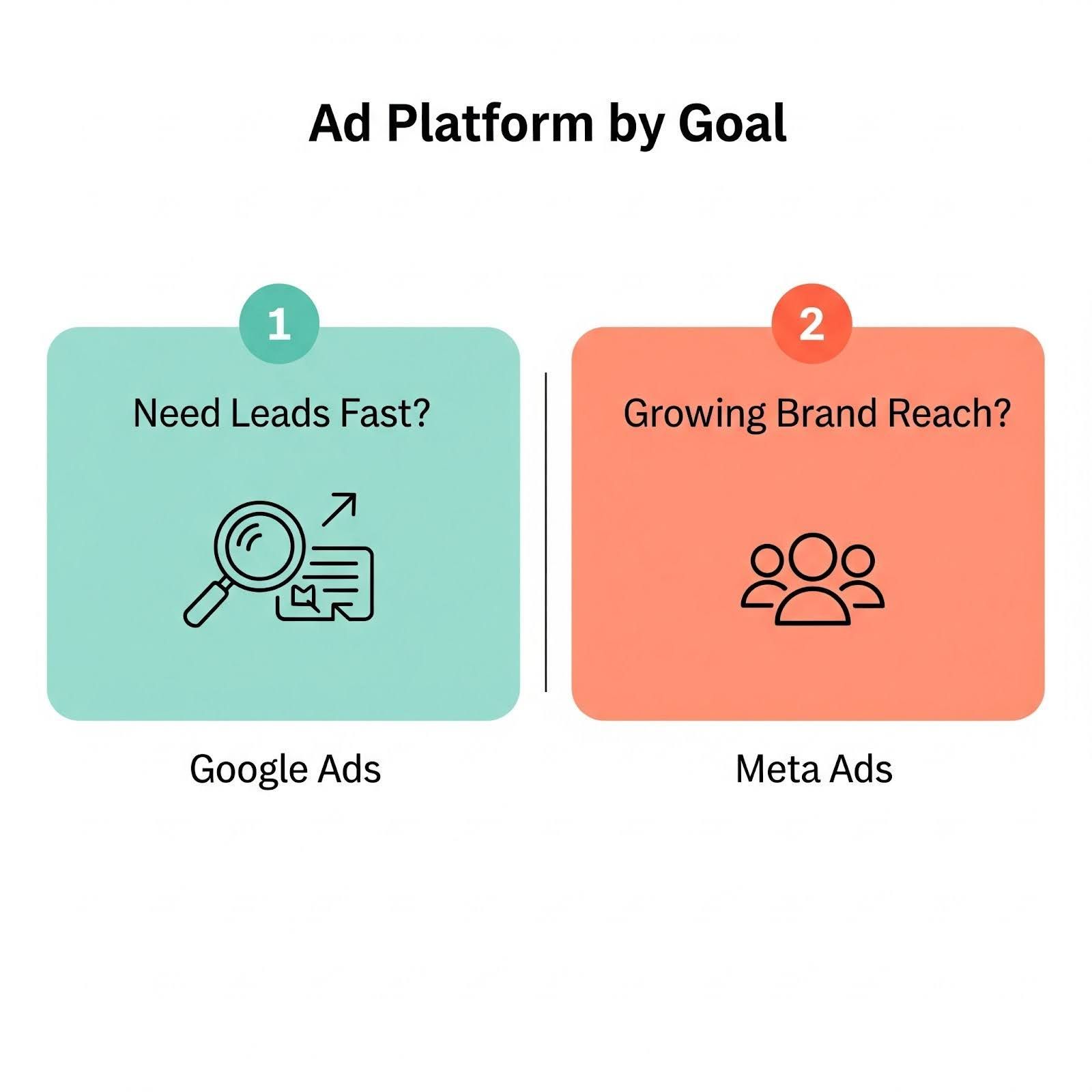
4. Use Cases Side-by-Side
Here’s a quick comparison of how each platform shines in specific scenarios:
What the Top NYC Advertising Agencies Recommend
No surprise, the most successful campaigns combine both platforms strategically. At BusySeed, one of the top NYC advertising agencieswe often create full-funnel campaigns. Meta Ads handle awareness and nurture, while Google Ads close the deal through focused search intent.
Example Strategy:
- Week 1-2: Run Meta Ads targeted at homeowners in New York looking for “home improvement tips”
- Week 3: Retarget those who watched your video with an offer
- Week 4: Capture intent-based traffic on Google Ads with “home siding repair in Queens”
This blend captures interest, builds trust, and converts demand into action. This holistic approach to ppc ads management often yields the best long-term results.
BusySeed’s Real Results: A Quick Case Study
A New York-based roofing company came to BusySeed unsure whether to go with facebook or google ads. We split-tested both:
- Google Ads: Delivered 53 qualified leads in 30 days at a $62 CPL
- Meta Ads: Delivered 104 leads at a $28 CPL, but only 31 converted. After nurturing Meta leads over 60 days via email and messenger campaigns, total conversions reached parity, but Google leads turned faster and closed easier. Lesson? Both platforms win, in different ways. Consulting with skilled New York ad agencies can help businesses interpret these nuanced results and refine their strategies.
Let’s Talk Strategy That Grows with You
Deciding between Meta Ads and Google Ads comes down to your immediate needs, budget, and creative assets. At BusySeed, we don’t take a “one-size-fits-all” approach. As one of the top NYC advertising agencies, we tailor every ppc ads management strategy to your business goals, emphasizing revenue growth above all. We leverage the strengths of both Google Ads and the Meta Business Ads Manager to create a synergistic effect.
Schedule a free consultation to discuss Google Ads or Meta Ads: Which Platform Gets Better Leads for Home Services? with a member of our expert team.
Or if you’d rather dive deeper: Contact BusySeed today to learn how our growth architects can help you dominate on both platforms. Unlock the secrets of top-performing campaigns from New York ad agencies like ours.
FAQ: Google Ads vs. Meta Ads for Home Services
Q1: Is Google Ads or Meta Ads better for a small home service business with a limited budget?: For a very limited budget focused on immediate, high-intent leads, Google Ads (specifically search campaigns targeting long-tail keywords) might offer quicker wins, despite potentially higher CPLs. Meta Ads can be more budget-friendly for broader awareness and retargeting but may require a longer nurture cycle. The best choice depends on your specific goals and whether you prioritize fast conversions or wider reach with the Meta Business Ads Manager.
Q2: How important are visuals when comparing facebook or google ads?: Visuals are paramount for Meta Ads. Platforms like Facebook and Instagram are visual-first, so high-quality images and videos are essential for capturing attention. For Google search ads, the copy is king. However, Google Display Ads and Performance Max campaigns do rely heavily on visuals, similar to Meta Ads.
Q3: Can I run both Google Ads and Meta Ads at the same time?: Absolutely! In fact, many top NYC advertising agencies recommend an integrated strategy. Using both platforms allows you to cover the full marketing funnel, from building awareness on Meta to capturing high-intent searches on Google. This often leads to the best overall results.
Q4: What is the Meta Business Ads Manager and how does it compare to Google Ads interface?: The Meta Business Ads Manager is the platform used to create, manage, and track ads across Facebook, Instagram, Messenger, and Audience Network. Both Google Ads and Meta Business Ads Manager are powerful tools, but they have different interfaces and workflows. Google Ads is more keyword and data-focused in its layout, while Meta’s interface is more geared towards audience creation and creative management. Both have a learning curve.
Q5: How do I choose between different New York ad agencies for managing my home service ads?: Look for agencies with specific experience in the home services sector and a proven track record with both Google Ads and Meta Ads. Ask for case studies, understand their approach to ppc ads management, and ensure they focus on metrics that matter to your business, like leads, sales, and ROI, not just clicks or impressions.
Looking for more ways to grow? Check out our PPC Services page or explore our blog on "How to Audit and Improve Your PPC Campaigns for Maximum ROI" At BusySeed, we’re not just marketers, we’re growth architects. Let’s build something incredible together.
Ready to stop guessing and start growing? Let’s make your marketing dollars work smarter.