
Omar Jenblat • March 2, 2020
Sales leads are crucial to the success of many businesses. Let's take a look at 15 sales leads statistics that you should know!
We’ve already discussed what a sales lead is, how you can get them, and a few ways you can help to warm them up. We’ve also talked about how you can track the leads you get so that you stay organized. Now, we’d like to give you some marketing statistics about sales leads and lead generation that you should keep in mind. Here are some of the most fascinating and relevant statistics (so far) of 2020.
1. A whopping 61% of businesses say that generating leads is the biggest challenge they face. More than half of the businesses involved in the study, all trying different methods of lead generation, offering different products and services, and in different locations all agreed that bringing in leads is the hardest thing for them to accomplish. ( HubSpot )
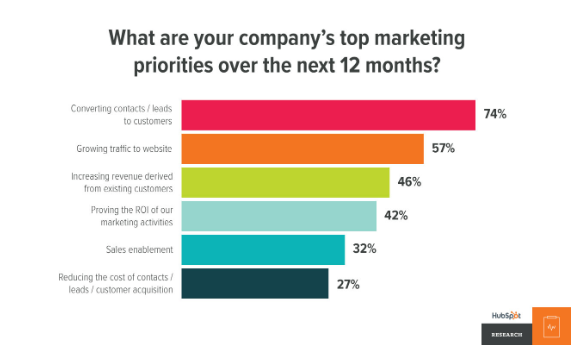
2. 74% of all businesses state that converting leads they generate into customers is their top priority. This means that almost ¾ of business recognize how important it is to convert sales leads and prioritize it accordingly. By prioritizing lead generation and conversion, companies are better able to dedicate the time that’s needed to streamlining and perfecting the process. (HubSpot)
3. The average cost per lead can range from $150 - $350 on average. This means that you should prepare to spend hundreds to get in a single lead. We promise it’s worth the cost! (HubSpot)
4. When a lead is contacted within five minutes of coming in, they are 9x more likely to convert into customers (InsideSales.com).
5. 93%
of B2B companies say that content marketing is more successful for lead generation than traditional marketing strategies (Forbes/
Marketo
). Content marketing is a type of marketing that involves creating and sharing online material (such as videos, blogs, and social media posts) that does not explicitly promote a brand but creates interest in the product or service being offered.
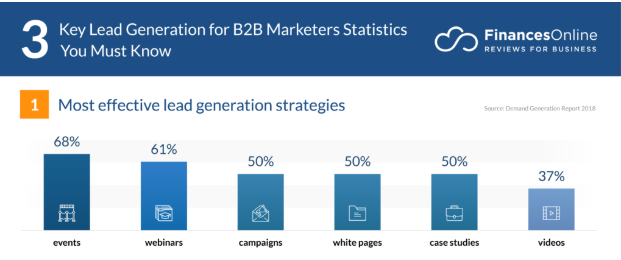
6. In B2B marketing, events are the best for lead generation and case studies are the best for converting leads ( Marketing Charts ). People in the business world love to attend events! By hosting one, you open up opportunities to find new leads. You can then supply those leads with informative case studies and you’ll soon see new conversions.
7. 96%
of visitors to your website are not yet ready to purchase or commit. ( Marketo
).There is a whole process that goes into making a purchase, and most of the visitors to your site are in the exploratory phase where they are looking at their options before narrowing down the list of possibilities.
8. 65%
of consumers prefer using a messaging app when contacting a business ( BusinessInsider
). This means that messenger ads could be a good way to get leads, or at the very least communicate with them.
9. Marketing automation can result in 2-3X l
ift in conversion rates of raw leads into qualified opportunities (Marketo). Automating the process can make it easier to capture leads, track them, and create a schedule for nurturing.

10. 26%
of users unsubscribe from mailing lists because of high frequency. (MarketingSherpa). This proves that finding the right balance of communication is crucial when warming leads. You need to stay in contact with sales leads, but you can’t become a pest that spams their inboxes constantly.
11. Only 18%
of marketers say outbound practices provide the highest quality leads for sales. ( HubSpot
). It is far more effective to draw people into your business, rather than pushing your services out to an uninterested audience. Inbound marketing will draw in an audience that wants what you have to offer so the leads you get a much more likely to convert.
12. Lead generation, sales, and lead nurturing
are the top three organizational objectives for content marketers. (Wordstream). Clearly, your marketing goals should shift to lead generation and nurturing sales leads if you hope to be successful in the industry!
13. One of the newest marketing analytics trends in 2020 will likely be focused on machine learning processes
including predictive analytics. (Business2Community). Marketing statistics professionals know how much easier life will be if there is a mechanical way to predict trends, analytics, and changes in the industry.
14. Only 29%
of brands nurture their existing customers beyond the initial purchase. ( Demand Gen
). This is not a good sales practice because nurtured leads are much more likely to convert to customers than leads who are treated as a “set-and-forget.”

15. Organizations adopting a mobile CRM see a 59% increase in sales performance (SuperOffice). By having a CRM in your pocket, you can keep up with the leads you get in as close to real-time as possible. This great statistic coincides with the 9x increase you’ll see when you respond to a lead in five minutes or less.
These are marketing statistics that you’ll want to know for 2020! You can learn a lot about sales leads and the process by taking a look at statistics found in studies. Keep these in your back pocket and use them to improve your sales team! The team at BusySeed has been perfecting our sales process for years, and we’re still learning every day. We specialize in lead generation ads and would love to help your company grow! When you work with us, you’ll see more leads than ever before! We have many ways to warm leads so your new prospects will be well-qualified and eager to learn more. Call us at (888) 353-1484 to get started!