
Building a brand requires mixing a variety of brand elements together seamlessly and cohesively. The stronger your brand the more recognizable it becomes from even just one element. Take Coca Cola for example. The logo, color, font, and bottle have all helped bring the brand into the $170 Billion club. It's time to start using brand elements for your small business!

We've already discussed brand voice and tone and the importance of cohesive creative. Today, we want to talk about brand elements. That's right; we're going to take a look at the key players in building a brand. Without elements, your branding would be all over the place. Think about your favorite brand. What comes to mind? Certain colors? Their logo? Maybe a unique font? All of those things (and more!) are brand elements. These MVPs can be easily overlooked, but the fact of the matter is that they're necessary for building brand awareness and image. Take Coca-Cola. They're the $170 billion dollar brand we referred to in the title. Their brand elements are so famous that they're identifiable by themselves. This makes branding everything much easier for the company, and it played a huge role in gaining brand awareness around the globe. A feat like that doesn't happen overnight and relies on all of the players working together as a seamless unit. Coke's marketing team found the perfect recipe and have shown exactly what strong brand elements can do for a company's popularity and success. Branding your small business can take it into the next level of profitability too. Don't you want to be the next Coca Cola? We sure do. Let's take a look at some of the most popular brand elements in detail.
Brand Name
It makes sense to talk about the brand name first, right? Afterall, how can you expect to be successful with no name or a bad one? Let's put it this way, the name of your business is what people remember and talk about. If you're talking about where to get lunch you're going to list the names of restaurants, not the color or logo. Your brand name needs to be catchy and memorable. You obviously need to make sure that the name isn't already taken or you could end up in some legal trouble. You also want to steer clear of innuendos and inappropriate language in your name. While some businesses can get away with it, it's a bad idea if you're hoping to attract families. Why clever and funny, innuendo names are not taken very well by all demographics. A few general rules of thumb:
-
Puns are fantastic
-
A play on words is also great
-
Alliteration helps (Coca-Cola)
-
Keep it short, sweet, and to the point
-
Avoid offensive language
-
Never infringe on copyrighted material (seriously, don't do it)
Brand Logo
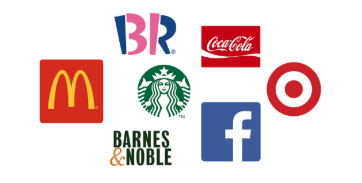
Next up we have the all-important brand logo. The logo is what people will picture in their heads when they think of your company. For example, we think "McDonald's" but picture the Golden Arches. Your logo needs to be memorable and unique. In things like social media ads and posts, your logo will brand everything. The idea is to have a logo that is recognizable enough to replace your brand name. So, when Nike wants to brand something, they use the swoosh and we all know exactly who it is. Some companies incorporate their name into their logo. Those can perform equally as well, they're just more text-reliant (Coca Cola, Barnes & Noble, Google, etc). A happy medium between the two is focusing on the first letter or just a portion of the brand name. There's text for more obvious brand recall, but it's shortened to avoid having to use the full-name on everything (Baskin Robbins, Pinterest, Facebook, etc). Logos should be neat, compact, and unique for maximum impact.
Brand Colors
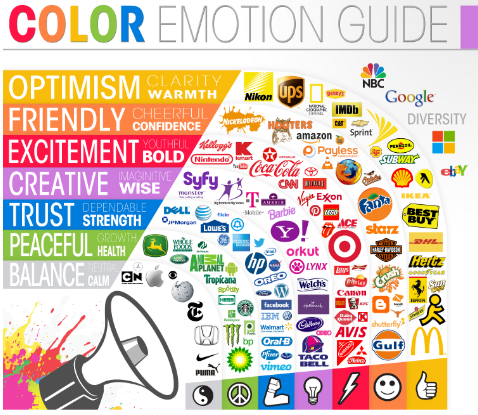
Once you have the name and logo set, you need to pick your brand colors. Different colors represent different things and can cause different emotional responses, so do your research before you just pick colors you like. Read up on Color Theory and then choose your brand colors. These colors will be used to brand everything. You want to choose colors and stick to them so that your content is cohesive. Let's look at Coke once again. Their signature red and white colors are famous! The colors of the Google logo are known everywhere. Barbie even has their shade of pink patented! Your colors should represent your brand and how you want customers to feel when working with you. Our BusySeed green was chosen to represent both the growth companies see when working with us as well as the profits! Facebook and Twitter are blue to represent calmness and trust. Know what you want to say and the how will come later.
Brand Shapes
Branding your small business continues with shapes. Shapes are an essential brand element to give your company a personality. More modern companies tend to like straight, clean lines and accompanying shapes. For these companies, you won't see any circles, blobs, or other "whimsical" shapes. IBM is an excellent example of this. Since they're a tech company, their logo, website, and online content is very rigid and angular. Their product doesn't mess around and the straight lines help convey that. For brands that want to seem more casual, relaxed, and creative, softer shapes are the way to go. Curved lines rather than straight lines represent fluidity and make a brand seem more "chill" for lack of a better word. Coca-Cola relies heavily on fluid shapes to represent their product (which is a liquid and therefore fluid) and their laid-back, let's-have-fun attitude. Then you have the brands that find the happy medium. Branding your small business somewhere in-between the two extremes is great for showing that you're serious but also relatable and know how to have a good time when appropriate. Here at BusySeed we use a lot of slanted lines. They're still straight because we get work done and take our job seriously, but they're not rigid because we aren't. If you met our team you'd see that we certainly know how to have fun while also killing the game and growing businesses like crazy. Other brands who mix harsh and whimsical shapes are Google, Target, and Stop and Shop.

Brant Font
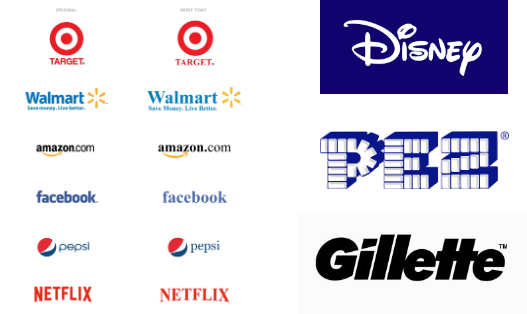
Lastly, let's discuss brand font. Branding is important for small business and fonts are one of the best ways to go about it. Your fonts should reflect your brand's personality similar to the shapes you use. Fonts are used on all online advertising, print ads, your sign/logo, and on your website. Everything you brand will likely have your font on it. It's good practice to choose a few fonts that can be used to differentiate headlines from body text from sub headlines. Your fonts should be different enough to distinguish between them, but should also fit nicely together and be the same style. If you're more modern, clean, and edgy you probably want to choose fonts in a san serif family (without the little tails at the end of letters). Book stores, newspapers, and more vintage or classic brands tend to choose serif fonts that look older and more regal. Serif fonts take up more room and the letters are not as close together. This isn't always great for logo design so it's generally avoided unless your brand fits into an appropriate industry. More elegant or fancy brands chose scripts for their headlines. Body font shouldn't be a script because they're often difficult to read when you make the size smaller.
Whew! That was a lot! It makes sense though, because brand elements are the building blocks for a brand. If you don't get them right, your brand won't be well-received and your business could flop. Take time to solidify your choices when choosing your elements. Branding is important to your small business and you really need to do it right. There are a ton of guides, checklists, and tips online from top marketing teams around the world. Try to compile all of them together and take advice from each. Coca-Cola is one of the most well-known brands in the world. With the right brand elements, you could be next. If you need some help with branding, rebranding, or creating a brand guide, call BusySeed! Our team of experts will help you choose brand elements that make sense for your brand and that you love. We do logo design, brand guide creations, and so much more! Managed social media is our specialty and we've helped build hundreds of brands through social media advertising and posts. Get started today and call (888) 353-1484.